
If your current skincare routine includes a revolving door of exfoliants, vitamin C, retinoids, and multi-step serums, you aren’t alone. In the pursuit of luminous glass skin, it is dangerously easy to cross the thin line between targeted active care and over-sensitization.
When your skin suddenly feels tight after cleansing, stings when applying basic moisturizer, or develops unexplained redness and micro-breakouts, the diagnosis is rarely an mystery product reaction. More often than not, it is a signal that your skin barrier—the stratum corneum—has been compromised.
Understanding how to identify, pause, and restore a damaged skin barrier is the cornerstone of long-term skin health. Here is a clinical breakdown of why your barrier breaks down and how to execute a proper skin reset.
🔬 What Is Your Skin Barrier (And Why Is It Vital?)
Think of your stratum corneum as a brick-and-mortar protective wall guarding your inner dermal layer:
- The Bricks: An array of tough skin cells called corneocytes.
- The Mortar: A dense extracellular matrix made of essential lipids—specifically ceramides (50%), cholesterol (25%), and free fatty acids (15%).
When this lipid matrix is intact, it fulfills two essential functions: it seals vital moisture in (preventing Trans-Epidermal Water Loss or TEWL) and keeps environmental irritants, bacteria, and pollutants out.
When harsh physical scrubs, high-percentage acids, or over-exfoliations strip this mortar away, the brick structure weakens. Water escapes, pathogens enter, and chronic inflammation sets in.
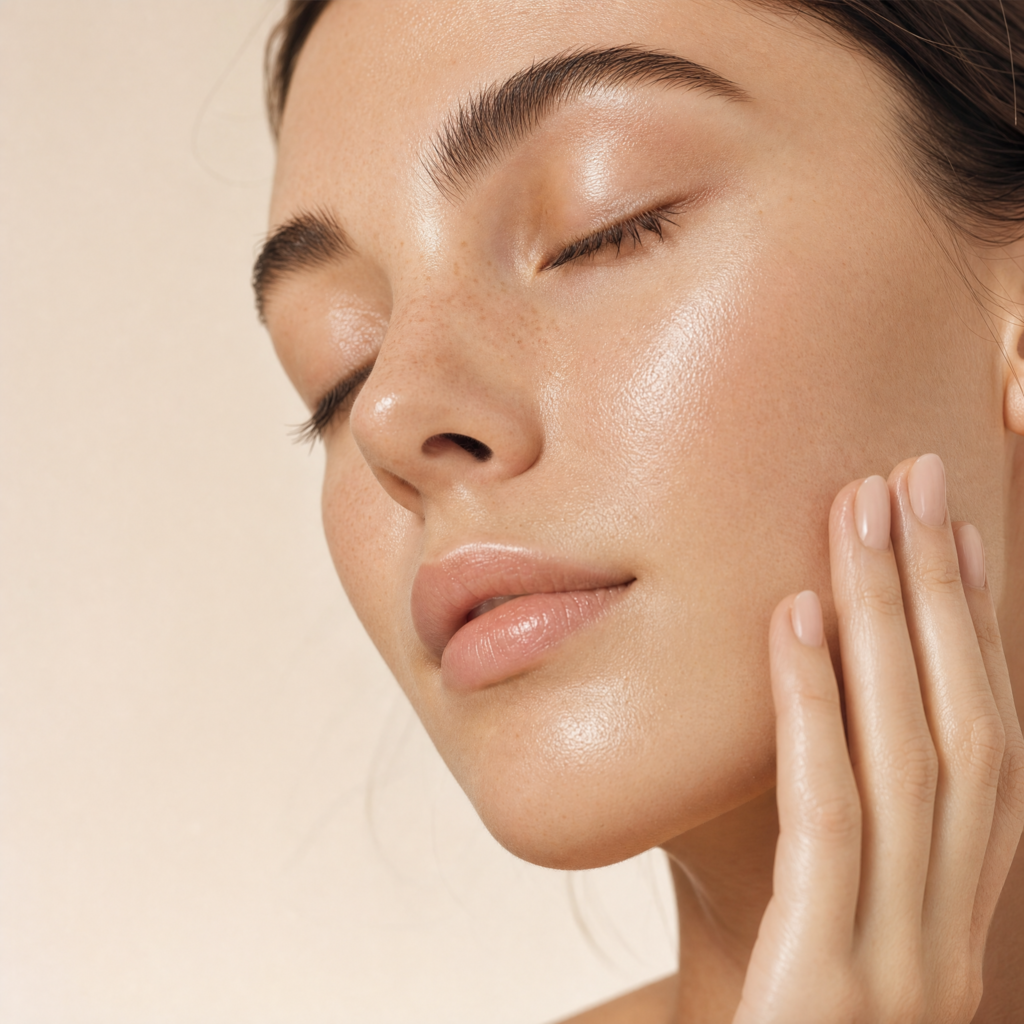
🚩 4 Warning Signs Your Barrier Needs a Reset
A compromised barrier manifests differently depending on your skin tone, but the underlying symptoms share common markers:
- The Post-Cleanser Tightness: Your skin feels parched, stiff, or stretched immediately after splashing with water or mild cleanser.
- The “Sting Response”: Gentle products that usually soothe your skin—even simple hyaluronic acid serums—suddenly cause a burning or prickling sensation.
- Dehydrated Shininess: Your skin looks shiny or reflective, but feels dry and rough to the touch. This artificial shine is caused by thinned epidermal tissue, not hydration.
- Sudden Micro-Breakouts or Flush: Uncharacteristic redness, reactive flushing, or tiny textured bumps that don’t respond to typical acne treatments.
🩹 The 3-Step Barrier Reset Protocol
When your barrier is in distress, layering more active serums will only compound the problem. Restoring stratum corneum health requires an intentional reset.
Step 1: The “Actives Fast” (7–14 Days)
Temporarily remove all chemical exfoliants (AHAs, BHAs, PHAs), retinoids, L-ascorbic acid (Vitamin C), and physical face scrubs. Strip your daily routine down to just three fundamentals: a gentle non-foaming cleanser, a lipid-rich moisturizer, and a pure mineral sunscreen.
Step 2: Bio-Identical Lipid Replenishment
To rebuild the “mortar” of your barrier, look for formulations that supply bio-identical ceramides, fatty acids, and soothing botanicals.
- Ceramides & Fatty Acids: Products containing a balanced 3:1:1 lipid ratio help accelerate barrier recovery.
- Clinical Pick: SkinCeuticals Triple Lipid Restore 2:4:2 — An industry-gold-standard lipid ratio moisturizer that restores essential skin lipids and reinforces the natural barrier.
- Soothing Centella & Hypochlorous Acid: To calm active flushing and stinging, gentle anti-inflammatory sprays and concentrates work wonders.
- Daily Calming Hero: Tower 28 SOS Daily Facial Spray — Formulated with pure hypochlorous acid to soothe irritation, reduce redness, and defend against environmental stressors.
- Restorative Barrier Cream: La Roche-Posay Cicaplast Baume B5+ — Infused with Panthenol (Vitamin B5) and Madecassoside to immediately comfort compromised, dry, or irritated patches.
Step 3: Non-Nano Mineral Sunscreen Protection
UV radiation generates free radicals that degrade recovering lipids. Choose a physical, non-nano zinc oxide sunscreen, which acts as a physical shield while naturally calming inflammation.
💆 When At-Home Care Needs Clinical Precision
While a simplified routine and lipid barrier creams are essential first steps, deep cellular repair sometimes requires targeted clinical intervention. High-precision modalities like hyperbaric purified oxygen infusions, cryo-globe lymphatic cooling, and bio-lipid ceramide occlusive seals can rapidly soothe inflammation without disrupting the acid mantle.
Not sure if your skin needs an intense barrier reset or hydrating infusion?
Take our 60-second AI Skin Diagnostic to evaluate your barrier profile, or explore The Barrier Restore Edit—our signature clinical sanctuary designed specifically to calm reactive, flushed, or over-exfoliated skin.
This article contains curated affiliate links. If you choose to purchase through these links, we may receive a small commission at no additional cost to you. The content provided on this blog is for informational and educational purposes only and is not intended as medical or dermatological advice, diagnosis, or treatment. Always consult with a qualified physician or board-certified dermatologist regarding any specific skin conditions or health concerns.

Pingback: At-Home Skincare Ritual for Glass Skin - The Skin Edition | SKN EDITR